




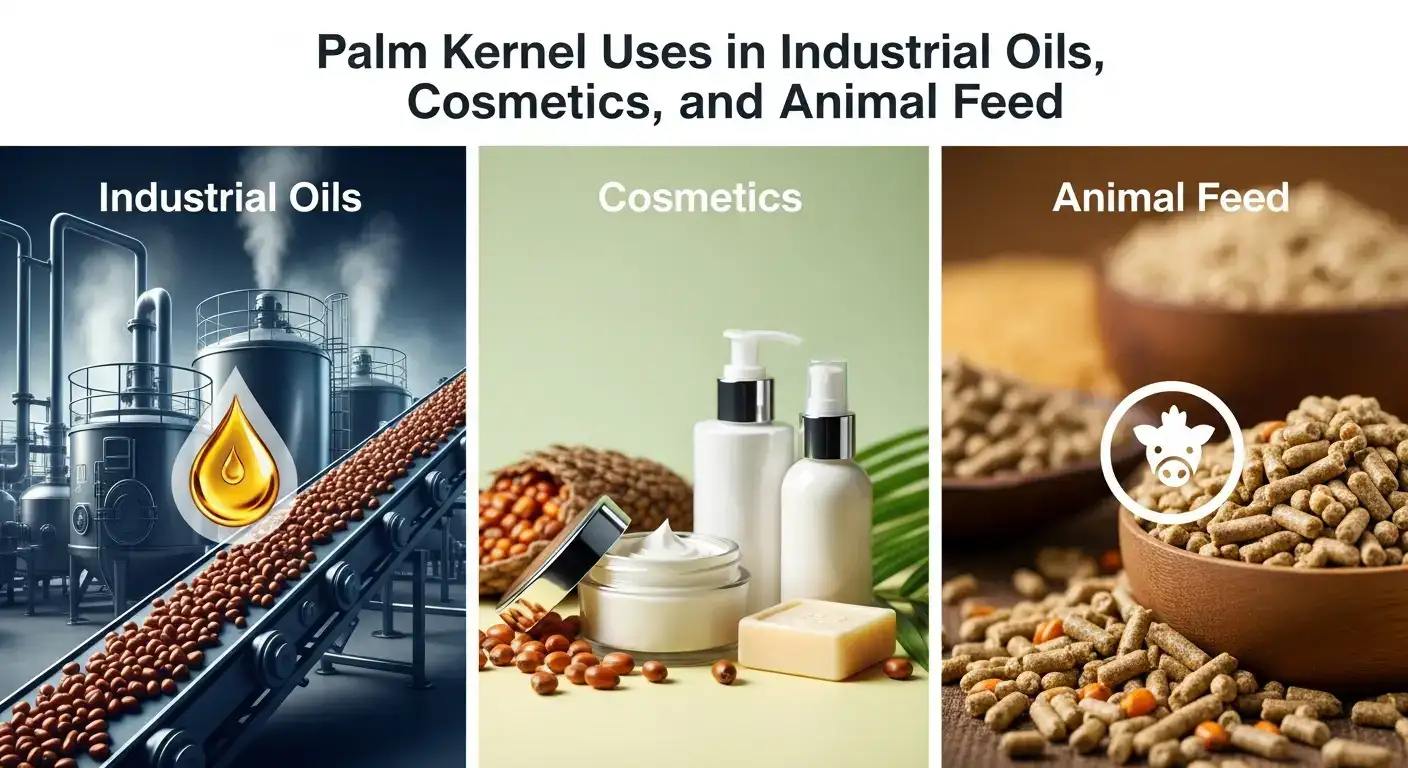
Palm kernels are the seeds of palm fruit produced by oil palm trees. These tiny kernels also contain valuable oils and proteins, which are used in a variety of ways across many industries. Although many people have heard of palm oil as a product derived from the flesh of the fruit, Palm kernel oil and palm kernel meal have distinct characteristics and uses.
The desire to understand how different industries use palm kernel products would give us a clue to their economic significance and applications in modern industry and farming.
The fruits of oil palm trees grow in masses of bunches. The outer flesh and inner seed, referred to as the kernel, are contained in each fruit. Once the palm oil has been extracted from the hard fruits, the processors crack the hard shells around the kernels. Separate processing is then made towards the kernel inside.
Cleaning, drying, and crushing of the kernels take place. The oil is extracted from the crushed kernels by mechanical means or solvents. The oil is palm kernel oil, and the solid part of this is the palm kernel meal or cake. Both are commercially valuable products.
Palm kernel oil is quite different from palm fruit oil. It has more lauric acid, a medium-chain fatty acid with its own peculiarities. This composition is what makes palm kernel oil behave differently from other vegetable oils in its applications.
Palm kernel meal is a mixture of oil remnants comprising protein and fiber. The meal also retains nutritional value useful in animal nutrition. Protein content generally ranges from 14 to 20 percent depending on the extraction method.
A large raw material in making soap is palm kernel oil. The composition of lauric acid is excessive, which results in soaps that lather and clean well. Companies that produce industrial soaps prefer this oil because it yields hard bars of soap as durable as those made with alternative oils.
Palm kernel oil is also essential in the manufacture of detergents. The oil undergoes chemical conversion into surfactants, which are active cleaning agents in detergents. Such surfactants clean such fabrics and surfaces by eliminating dirt and grease. The chemical structure of the oil is perfect for the production of good cleaning products.
The palm kernel oil is used as a base in industrial lubricants. The oil may be chemically altered to produce lubricants of certain characteristics. These petroleum-based bio-lubricants offer environmental benefits compared to petroleum products.
Metalworking fluids are made from palm-derived materials to reduce friction during cutting and shaping metal products. It enhances the manufacturing processes and protects the tools because the oil is heat-stable and a lubricant. The use of bio-based lubricants across many industries is now driven by environmental factors and worker safety.
Palm kernel oil can be transformed into biodiesel in a chemical procedure known as transesterification. It is a cleaner fuel that produces fewer emissions than petroleum diesel. Palm kernel oil is one of the palm vegetable oils used by countries seeking sustainable alternatives to fossil fuels.
Glycerin, a byproduct of biodiesel, has other commercial applications. This renders the production of palm kernel biodiesel economically viable, other than the value of the fuel itself.
Palm kernel oil derivatives are used as coating materials in food packaging and paper products. These coatings are used as moisture barriers, non-sticking, and product appearance enhancers. The oil's physical characteristics make it suitable for forming thin, uniform coatings.
Protective coatings of metals and other materials are used industrially. Palm kernel oil is modified to form water-resistant barriers and protective films. These coatings improve product performance and extend product life across different environments.
Cosmetic manufacturers are interested in palm kernel oil because it can be used to produce mild cleansers. The oil provides a good lather and effectively removes dirt and oil from the skin without undue drying. Numerous natural and organic soap brands are strong supporters of palm kernel oil.
Palm kernel derivatives are surfactants used in making body wash formulations. These ingredients have an effect of cleaning skin and at the same time balance the moisture. Palm kernel-based cleansers are mild and, therefore, the right choice for sensitive skin products.
Palm kernel oil derivatives are used as the primary cleaning agents in shampoo formulations. The ingredients prevent hair accumulation and maintain the natural oils required to keep hair healthy. The chemical structure of the oil can be cleaned effectively without being stripped hard.
Palm kernel oil is also used as a conditioner and hair treatment due to its moisturizing properties. The grease veils hair follicles and gives shine. Palm kernel oil is used in hair styling products to provide them with hold and texture.
There are moisturizers and lotions that make use of palm kernel oil because of its emulsifying characteristics. The oil does soften and smooth the skin, creating a protective layer against the loss of moisture. Its medium fatty acids are easily absorbed into the skin, leaving no heavy, greasy deposits.
The palm kernel oil is used as a carrier in anti-aging products. The oil helps transport beneficial substances into the skin. Its antioxidant qualities can confer some other benefits of skin protection.
Lip balms and lipsticks are based on the solid at room temperature properties of palm kernel oil. The oil enhances homogeneity and makes application easier. Its natural condition attracts consumers seeking plant-based cosmetics.
Palm kernel oil is used as a makeup remover and cleansing balm. The oil is beneficial for removing oil-based products without irritating sensitive facial skin. Palm kernel oil has become prominent in many natural beauty brands in cleansing products.
Palm kernel meal contains high levels of protein and energy for livestock. The food contains digestible nutrients that enhance the production and growth of animals. Its high fiber content helps digestion in ruminant animals such as sheep and cattle.
Palm kernel meal is a protein supplement for cow feed used by dairy farmers. The fat in the meal also provides additional energy that aids in milk production. The best nutrition with no digestive issues is achieved with proper inclusion rates.
Palm kernel meal is used as a protein source in chicken and turkey feeds. The meal is a source of vital amino acids essential for growth and egg production. Nutritionists handling poultry take a lot of care when mixing the palm kernel meal with other food to achieve full nutritional needs.
Palm kernel meal fiber does not have the same effect on poultry as on ruminants. To prevent digestive issues, poultry feed formulations limit the use of palm kernel meal diets. Nonetheless, it is still an important source of protein in most poultry industries.
Pig farmers also use palm kernel meal in their feed mixes, especially when rearing pigs. The meal is a cost-effective source of protein when mixed well with other feeds. It is useful for healthy weight gain due to its energy content.
Palm kernel meal is a dangerous food for young pigs. Fiber intake may reduce feed digestion in young animals. Palm kernel meal is usually added to pigs' diets once they are old enough to handle higher fiber levels.
Palm kernel meal is another protein source used in fish farming operations. The feed has been shown to reduce feed costs while sustaining the growth rates of fish. Palm kernel meal has varying tolerances in the diets of different fish species.
Palm kernel meal nutritionally improves water stability in aquaculture feeds when incorporated into pellets. This makes sure that the nutrients are not lost to water and that water quality remains intact. The inclusion of the palm kernel meal is especially appropriate in shrimp and tilapia farming.
The palm kernel meal is generally cheaper than the conventional sources of protein meal, such as soybean meal. This affordability benefits farmers to keep the cost of feeds low and keep the animals fed. Palm kernel meal is available in many parts of the world, making it a stable supply.
The consumption of palm kernel meal helps farmers be sustainable by using a byproduct that would otherwise go to waste. This high utilization of palm processing products has economic and environmental objectives.
Palm kernels with low oil content are then subjected to mechanical pressing, which removes about 85% of the oil, leaving the meal with a high residual oil content. In practice, all the oil is extracted using solvents, creating a leaner meal. The two methods produce products suitable for various applications.
Industries usually favor mechanical oil extraction due to its purity. Cosmetic producers can mention solvent-free extraction to attract customers seeking natural products. Either of the two meal extraction methods is used as animal feed.
Palm kernel products should meet the quality requirements for their intended uses. The oil used in industry needs to meet specific fatty acid requirements and have a low impurity level. There are more stringent purity standards and testing requirements for cosmetic ingredients. Animal feed meals are to be uncontaminated and uniform in nutrient content.
The certification programs are used to check the sustainable palm production practices. The issue is that many buyers have become aware they need certified products. Through these certifications, responsible sourcing is ensured across supply chains.
The palm kernel oil is solid at room temperature, and this is an added advantage in storing and transporting this oil. The oil is slower at oxidizing than most vegetable oils, a factor that adds to extending the shelf life. By means of storing in closed containers, contamination can be prevented and loss of quality avoided.
Palm kernel meal is to be stored in dry conditions to avoid the growth of molds. Humidity reduces the nutritional value of animal feeds and poses a health risk. Warehouses are kept at a controlled humidity level so that the quality of the meals is not compromised.
Palm planting has been accused of destroying habitats and causing deforestation. Sustainable approaches of loyal manufacturers are not harmful to the forest and animals. Such certification schemes as RSPO give guidelines on environmental safety.
Most firms are already making the promise of sourcing certified sustainable palm products. This is a market pressure that promotes excellent production practices. Demand for responsibly produced palm kernel products is driven by consumer awareness.
Each fruit bunch yields several products of Palm oil production. Palm kernel processing turns what would otherwise be waste into the maximum value. This effectiveness results in fewer total environmental impacts per unit of product.
Palm kernel meal helps reduce the demand for crops grown for feed. This effective utilization of resources sustains more agricultural systems. Recycling of palm material is of a responsible nature as observed in the circular manner of palm processing.
Palm kernels are used in various applications across industries, cosmetics, and agriculture. With rising sustainability concerns, responsible palm kernel processing will meet global demand with minimal environmental impact.
The realization of these uses brings into view the huge importance of palm kernels in current manufacturing and farming.
A reliable wholesale nuts exporter can make or break a company, depending on the quality and stability of their nut supply. The global nut market has many suppliers varying in quality, price, and service. Choosing an inappropriate exporter will lead to financial losses, quality issues, and supply chain failures. Companies require methodologies to identify exporters who deliver quality products on time and at reasonable prices. The blog identifies considerations for assessing potential wholesale nut exporters for bulk orders. Knowing Your Business Workings. Determining the Type of Nut needed. Nuts are needed in different varieties in different businesses. Products might require special nuts from food manufacturers. The retailers may desire pack variants. Specific knowledge of the required nuts will narrow the search to specialized exporters. Other exporters specialize in specific forms of nuts such as almonds or cashews. There are those with extensive selections. Specializing in exporters to meet business needs will result in higher quality and better pricing. Specialty exporters are also more knowledgeable and better sourced on their special products. Determining Order Volumes The size of bulk orders is not very similar to that of businesses. Small stores can take orders of a few kilograms per month. Large manufacturers may need container loads weekly. Small businesses typically have few orders, which should align with business requirements. Knowledge of long-term volume requirements enables exporters who are in a position to meet the growth to be identified. A small order exporter may not be able to cope with rapid growth. On the other hand, large exporters might fail to provide adequate service to small buyers. Quality Standards Required Food safety laws differ by country and use. The direct consumer sale of products is stricter than the sale of ingredients to industry. Being informed about the required credentials and quality control in the early stages helps avoid problems later. Exporters are influenced by organic certifications, managing allergens, or a special processing technique. Clear quality requirements can be used to filter exporters during initial screening. Checking Exporter Credentials. Registration and licenses of business. A legitimate exporter has valid business registrations in their home country. These registrations indicate legal operation and accountability. Ordering the registration and license numbers will enable verification through official channels. Food-specific export licenses are evidence of compliance with international trade laws. To ensure consumer safety and dignity, countries control the export of food. Valid export licenses refer to exporters that meet government standards. Industry Certifications The presence of food safety certificates such as ISO and BRC is a sign of a systematic quality management system. These globally accepted standards need periodic audits and records. Certified exporters are quality and safety-oriented. The use of a certain nut processing certification confirms good handling and storage techniques. Testing for aflatoxin certification is especially important for highly susceptible nuts. The need to certify copies and check with the issuing bodies is a way to assure genuineness. Membership in Trade Associations. Being a member of a known trade association implies professionalism and a place in the industry. Associations usually call upon members to fulfill certain requirements and to adhere to a code of ethics. Membership confirmation involves checking the association directories. The trade associations also provide dispute-resolution services in the event of issues. This added line of protection is advantageous to the buyers who deal with exporters in remote nations. Assessing Product Quality Sample Testing It is necessary to request the samples first before placing large orders. The samples demonstrate the true quality, competitors, and taste of a product. Comparing samples from various exporters helps determine the best options. Tests on contaminants, moisture, and nutritional values can be done in professional testing laboratories. This objective data is an addition to the sensory assessment. Testing costs are not high compared to the risks of ordering defective products. Processing and storage Methods. The processes and storage methods used by exporters significantly affect quality. Correct drying prevents mold development. Storage is kept fresh in climatic conditions. Quality commitment is observed by asking detailed questions regarding facilities and procedures. A request for photos or a virtual tour of the facility offers an insight into operations. Serious exporters have clean, modern facilities with the right equipment. Lack of good facilities casts doubt on quality control. Origin and Sourcing Transparency. Awareness of the source of nuts helps determine the potential quality. Regions of production will give varying quality standards depending on the weather, soil, and agricultural methods. The sourcing locations should be well-defined by the exporters. Direct linkage to growers usually leads to higher-quality products than purchasing through multiple intermediaries. Exporters visit farms and observe growing conditions, which usually provide more homogeneous products. Assessment of Business Practices. Communication Responsiveness Timely and precise communication means professionalism and focus on customer service. The interviews with the first set of inquiry questions show how exporters approach business. Mixed or slow reactions are indicative of future inconveniences. Language barriers sometimes complicate international trade. Good communication in English or professional translation services by exporters facilitates. Effective communication eliminates confusion in the specifications and requirements. Payment Terms and Methods Credible exporters provide fair terms of payment that ensure a win-win situation. Typical practices include the use of letters of credit that provide security for international relationships. New relationships provide greater security for escrow services. Full advance payments in untraceable payment methods indicate a risk of scams. Genuine exporters are aware of buyer issues and are willing to pay in accordance with international standards. The presence of flexible payment terms indicates flexibility and an interest in relationship building. Contract Clarity Professionalism is evidenced in detailed contracts on both sides. Contracts are expected to indicate product grades, quantity, prices, movement conditions, and quality. Clarity eliminates conflicts and creates accountability. Shipping responsibilities are outlined in the standard international trade terms, such as Incoterms. Knowledge of what the terms of prices are, be it FOB, CIF, or otherwise, makes the determinacy of costs clear. Unclear contracts or unwillingness to agree are concerning. Verifying References and Reputation. Customer Testimonials Customers who bought the products offer vital info on exporters' reliability. Asking for references will give you a chance to speak directly with other buyers. Talking about references gives actual experiences of what marketing says. There are more views provided by online reviews and testimonials. Nevertheless, it is essential to check the authenticity of reviews because there are false reviews. It is better to compare data from various factors to obtain more concrete images. History and Experience in Trade. Being in business for years is evidence of stability and experience. Long-term exporters have survived the market and gained experience. Startup exporters could be riskier and more innovative. The history of exports demonstrates the size of the business and its ability. More established exporters are known to have good logistics and quality control systems. Yet small exporters can offer more personalized services. Third-Party Verifications International trading sites, such as Alibaba, provide supplier checks. These checks are checking business registration, plants, and capacities. Verifications are assured of basic legitimacy, although no assurance is given of quality. There are credit reporting services that give information on financial stability. Financially stable exporters are more committed to meeting their obligations and are less likely to compromise. Poor economic performance implies possible delivery or quality problems. Logistic and Delivery Services. Shipping Experience The international shipping demands expertise in customs matters, documentation, and logistics. These complexities are tackled easily by experienced exporters. They can understand the import requirements of various countries and complete the paperwork. Enquiring about shipping partners and methods will reveal logistical capabilities. Maintaining contact with recognized freight forwarders would be a positive sign of quality in delivery. The lack of a good shipping schedule causes delays and losses. Packaging Standards Good packaging helps preserve the nuts. Moisture barriers, temperature, and crush resistance help protect against quality loss. Exporters are required to provide packaging techniques and packaging materials. Placing an order of packaging samples or photos displays packaging quality. Food-grade packaging suggests that product protection is a concern. The poor packaging implies cost reduction, which can lead to damage to goods. Delivery Reliability Punctuality of delivery is key in business. The indication of reliability is the request for delivery performance data or guarantees. Logistically secure exporters are those that offer time frames and tracking details. Stress plans show preparedness in cases of delays. Hurdles sometimes come along the way, and promising exporters have contingency plans. The way exporters handle complications reflects their service delivery to clients. Pricing Considerations Market Price Awareness Being aware of the market prices of nuts helps one avoid overpaying or getting into suspiciously low deals. Price-tracking services and trade publications provide benchmarks. Prices far below market value can be problematic or misleading. Prices vary depending on harvests, demand, and exchange rates. Exporters are supposed to elaborate on prices and the cost determinants. Open pricing negotiations create confidence. Total Cost Analysis The cheapest rate per kilogram is not necessarily the most advantageous rate. The total costs are calculated by factoring in shipping, insurance, customs duties, and payment fees. Cheap offers may turn out to be costly due to hidden fees. Quality costs also matter. A slight increase in cost for superior quality would reduce waste and customer complaints. Better decisions are made when one calculates the total cost of ownership rather than just the purchase price. Long-Term Pricing Stability The companies enjoy predictable and constant costs. Speaking about price stability enables budget planning. Exporters are entering into price-protection agreements with regular buyers. Volume orders can secure better prices. Contract negotiation involving multiple shipments could lower per-unit prices, but the supply will not be interrupted. Creating Sustainable Collaboration. Trial Orders A small initial trial order will mitigate risk but will also test exporters' performance. Trial orders are successful and pave the way to bigger commitments. This incremental method secures business in relationship development. Assessing the quality of trial orders, delivery, communication, and problem resolution indicates how partnerships would operate. Inadequate trial experiences foreshadow future problems. Effective Communication Channels. Direct contact points created in exporter organizations help ensure smooth operations. Knowing who is dealing with various issues will prevent communication failures. Healthy relationships are kept through regular check-ins. Using various forms of communication ensures they stay in touch across varied time zones. International coordination is flexible through email, phone, and messaging applications. Performance Monitoring Long-term monitoring of quality, delivery, and service metrics reveals trends. High-level performance implies being in stable partnerships. Falling metrics are indicators of required discussions or changes in exporters. Frequent feedback helps exporters understand buyers' expectations. Open communication of problems can be used to solve them before they get out of hand. Warning Signs to Avoid Red Flags in Communication Quick decisions under pressure indicate manipulation. Legitimate exporters also provide a time for evaluation. The unwillingness to provide detailed information or documentation suggests possible issues. Lack of consistency in the information relayed across different communications raises questions about honesty. Stories that vary or contradict what was said before convey a sense of untrustworthiness. Unrealistic Promises Versions that are much superior to competitors should be regarded with doubt. Expertly cheap fares or sure merits that are higher than the booming standards are usually untrue. Lack of Transparency Exporters who do not provide any insights into the facilities, certifications, or even references have a case to conceal. Open operations depict professionalism and trust. Secrecy suggests problems. Conclusion When choosing a wholesale nuts exporter, one expects to evaluate various areas, such as credentials, quality, communication, logistics, and pricing, among others. The delay to ensure credential verification, test sample testing, reference checks, and the initiation of trial orders saves businesses from costly errors. Customer satisfaction in terms of constant quality and service delivery makes the right exporter a well-deserved investment in terms of time and money.
READ FULLPalm kernels are the seeds of palm fruit produced by oil palm trees. These tiny kernels also contain valuable oils and proteins, which are used in a variety of ways across many industries. Although many people have heard of palm oil as a product derived from the flesh of the fruit, Palm kernel oil and palm kernel meal have distinct characteristics and uses. The desire to understand how different industries use palm kernel products would give us a clue to their economic significance and applications in modern industry and farming. What Are Palm Kernels Source and Processing The fruits of oil palm trees grow in masses of bunches. The outer flesh and inner seed, referred to as the kernel, are contained in each fruit. Once the palm oil has been extracted from the hard fruits, the processors crack the hard shells around the kernels. Separate processing is then made towards the kernel inside. Cleaning, drying, and crushing of the kernels take place. The oil is extracted from the crushed kernels by mechanical means or solvents. The oil is palm kernel oil, and the solid part of this is the palm kernel meal or cake. Both are commercially valuable products. Key Components Palm kernel oil is quite different from palm fruit oil. It has more lauric acid, a medium-chain fatty acid with its own peculiarities. This composition is what makes palm kernel oil behave differently from other vegetable oils in its applications. Palm kernel meal is a mixture of oil remnants comprising protein and fiber. The meal also retains nutritional value useful in animal nutrition. Protein content generally ranges from 14 to 20 percent depending on the extraction method. Industrial Application of Palm Kernel Oil. Industrial production of Soaps and Detergents. A large raw material in making soap is palm kernel oil. The composition of lauric acid is excessive, which results in soaps that lather and clean well. Companies that produce industrial soaps prefer this oil because it yields hard bars of soap as durable as those made with alternative oils. Palm kernel oil is also essential in the manufacture of detergents. The oil undergoes chemical conversion into surfactants, which are active cleaning agents in detergents. Such surfactants clean such fabrics and surfaces by eliminating dirt and grease. The chemical structure of the oil is perfect for the production of good cleaning products. Lubricants and Industrial Fluids. The palm kernel oil is used as a base in industrial lubricants. The oil may be chemically altered to produce lubricants of certain characteristics. These petroleum-based bio-lubricants offer environmental benefits compared to petroleum products. Metalworking fluids are made from palm-derived materials to reduce friction during cutting and shaping metal products. It enhances the manufacturing processes and protects the tools because the oil is heat-stable and a lubricant. The use of bio-based lubricants across many industries is now driven by environmental factors and worker safety. Biodiesel Production Palm kernel oil can be transformed into biodiesel in a chemical procedure known as transesterification. It is a cleaner fuel that produces fewer emissions than petroleum diesel. Palm kernel oil is one of the palm vegetable oils used by countries seeking sustainable alternatives to fossil fuels. Glycerin, a byproduct of biodiesel, has other commercial applications. This renders the production of palm kernel biodiesel economically viable, other than the value of the fuel itself. Coating and Surface Finishing. Palm kernel oil derivatives are used as coating materials in food packaging and paper products. These coatings are used as moisture barriers, non-sticking, and product appearance enhancers. The oil's physical characteristics make it suitable for forming thin, uniform coatings. Protective coatings of metals and other materials are used industrially. Palm kernel oil is modified to form water-resistant barriers and protective films. These coatings improve product performance and extend product life across different environments. Palm Kernel Oil in the Personal Care and Cosmetics. Soap and Body Wash Products Cosmetic manufacturers are interested in palm kernel oil because it can be used to produce mild cleansers. The oil provides a good lather and effectively removes dirt and oil from the skin without undue drying. Numerous natural and organic soap brands are strong supporters of palm kernel oil. Palm kernel derivatives are surfactants used in making body wash formulations. These ingredients have an effect of cleaning skin and at the same time balance the moisture. Palm kernel-based cleansers are mild and, therefore, the right choice for sensitive skin products. Hair Care Applications Palm kernel oil derivatives are used as the primary cleaning agents in shampoo formulations. The ingredients prevent hair accumulation and maintain the natural oils required to keep hair healthy. The chemical structure of the oil can be cleaned effectively without being stripped hard. Palm kernel oil is also used as a conditioner and hair treatment due to its moisturizing properties. The grease veils hair follicles and gives shine. Palm kernel oil is used in hair styling products to provide them with hold and texture. Skin Care Benefits There are moisturizers and lotions that make use of palm kernel oil because of its emulsifying characteristics. The oil does soften and smooth the skin, creating a protective layer against the loss of moisture. Its medium fatty acids are easily absorbed into the skin, leaving no heavy, greasy deposits. The palm kernel oil is used as a carrier in anti-aging products. The oil helps transport beneficial substances into the skin. Its antioxidant qualities can confer some other benefits of skin protection. Specialty Cosmetic Products. Lip balms and lipsticks are based on the solid at room temperature properties of palm kernel oil. The oil enhances homogeneity and makes application easier. Its natural condition attracts consumers seeking plant-based cosmetics. Palm kernel oil is used as a makeup remover and cleansing balm. The oil is beneficial for removing oil-based products without irritating sensitive facial skin. Palm kernel oil has become prominent in many natural beauty brands in cleansing products. Palm Kernel Meal in Animal Feed. Nutritional Value of Livestock. Palm kernel meal contains high levels of protein and energy for livestock. The food contains digestible nutrients that enhance the production and growth of animals. Its high fiber content helps digestion in ruminant animals such as sheep and cattle. Palm kernel meal is a protein supplement for cow feed used by dairy farmers. The fat in the meal also provides additional energy that aids in milk production. The best nutrition with no digestive issues is achieved with proper inclusion rates. Poultry Feed Applications Palm kernel meal is used as a protein source in chicken and turkey feeds. The meal is a source of vital amino acids essential for growth and egg production. Nutritionists handling poultry take a lot of care when mixing the palm kernel meal with other food to achieve full nutritional needs. Palm kernel meal fiber does not have the same effect on poultry as on ruminants. To prevent digestive issues, poultry feed formulations limit the use of palm kernel meal diets. Nonetheless, it is still an important source of protein in most poultry industries. Swine Nutrition Pig farmers also use palm kernel meal in their feed mixes, especially when rearing pigs. The meal is a cost-effective source of protein when mixed well with other feeds. It is useful for healthy weight gain due to its energy content. Palm kernel meal is a dangerous food for young pigs. Fiber intake may reduce feed digestion in young animals. Palm kernel meal is usually added to pigs' diets once they are old enough to handle higher fiber levels. Aquaculture Uses Palm kernel meal is another protein source used in fish farming operations. The feed has been shown to reduce feed costs while sustaining the growth rates of fish. Palm kernel meal has varying tolerances in the diets of different fish species. Palm kernel meal nutritionally improves water stability in aquaculture feeds when incorporated into pellets. This makes sure that the nutrients are not lost to water and that water quality remains intact. The inclusion of the palm kernel meal is especially appropriate in shrimp and tilapia farming. Economic Advantage to the Farmers. The palm kernel meal is generally cheaper than the conventional sources of protein meal, such as soybean meal. This affordability benefits farmers to keep the cost of feeds low and keep the animals fed. Palm kernel meal is available in many parts of the world, making it a stable supply. The consumption of palm kernel meal helps farmers be sustainable by using a byproduct that would otherwise go to waste. This high utilization of palm processing products has economic and environmental objectives. Processing and Quality Considerations. Extraction Methods Palm kernels with low oil content are then subjected to mechanical pressing, which removes about 85% of the oil, leaving the meal with a high residual oil content. In practice, all the oil is extracted using solvents, creating a leaner meal. The two methods produce products suitable for various applications. Industries usually favor mechanical oil extraction due to its purity. Cosmetic producers can mention solvent-free extraction to attract customers seeking natural products. Either of the two meal extraction methods is used as animal feed. Quality Standards Palm kernel products should meet the quality requirements for their intended uses. The oil used in industry needs to meet specific fatty acid requirements and have a low impurity level. There are more stringent purity standards and testing requirements for cosmetic ingredients. Animal feed meals are to be uncontaminated and uniform in nutrient content. The certification programs are used to check the sustainable palm production practices. The issue is that many buyers have become aware they need certified products. Through these certifications, responsible sourcing is ensured across supply chains. Handling and Storage The palm kernel oil is solid at room temperature, and this is an added advantage in storing and transporting this oil. The oil is slower at oxidizing than most vegetable oils, a factor that adds to extending the shelf life. By means of storing in closed containers, contamination can be prevented and loss of quality avoided. Palm kernel meal is to be stored in dry conditions to avoid the growth of molds. Humidity reduces the nutritional value of animal feeds and poses a health risk. Warehouses are kept at a controlled humidity level so that the quality of the meals is not compromised. Ecological Issues. Responsible Manufacture Palm planting has been accused of destroying habitats and causing deforestation. Sustainable approaches of loyal manufacturers are not harmful to the forest and animals. Such certification schemes as RSPO give guidelines on environmental safety. Most firms are already making the promise of sourcing certified sustainable palm products. This is a market pressure that promotes excellent production practices. Demand for responsibly produced palm kernel products is driven by consumer awareness. Efficiency Benefits Each fruit bunch yields several products of Palm oil production. Palm kernel processing turns what would otherwise be waste into the maximum value. This effectiveness results in fewer total environmental impacts per unit of product. Palm kernel meal helps reduce the demand for crops grown for feed. This effective utilization of resources sustains more agricultural systems. Recycling of palm material is of a responsible nature as observed in the circular manner of palm processing. Conclusion Palm kernels are used in various applications across industries, cosmetics, and agriculture. With rising sustainability concerns, responsible palm kernel processing will meet global demand with minimal environmental impact. The realization of these uses brings into view the huge importance of palm kernels in current manufacturing and farming.
READ FULLLet’s get one thing clear immediately: when it comes to nitrogen fertilizers, urea is the undisputed heavyweight champion. No nonsense, no foolishness; just the most concentrated nitrogen that encourages lush growth and high yields. If you are a grower for commerce or an agribusiness buyer, you are probably trying to figure out where to buy urea fertilizer, locally or online. You are not alone. Fluctuating prices, varying standards, and a crowded supply landscape make the “where-to-buy” decision complicated very quickly. Let’s take the distractions away and get straight to the point, focusing on where to source urea, questions to ask, and how to ensure you are not paying for a product when the soil starts talking. Why B2B Buyers Choose Urea Fertilizer If you are a seasoned farmer then you would be really familiar with urea fertilizer because it is a frequently used fertilizer in the agricultural sector that is really convenient to use. It’s chemical composition consists of 46% nitrogen. This means you will be able to deliver a much more nutrient-rich mixture per ton compared to ammonium nitrate or sulfate options. That translates directly into efficiency: less volume to transport, store, and apply. It’s compatible with most crops from cereals and maize to oilseeds and sugarcane and dissolves easily for both broadcasting and fertigation systems. But the real win? Urea gives you control. It’s a really versatile fertilizer option that can be easily tailored to manage hundreds of hectares or supplying cooperatives, It’s also one of the most budget-friendly nitrogen sources on the market particularly for those who want to buy in bulk. Where to Buy Urea Fertilizer: Local Suppliers and Distributors In agriculture, speed and reliability carry a lot of weight in making operations productive so procuring fertilizer locally makes sense. Local suppliers and distributors often have the kind of market experience and logistical advantage that gives them a massive edge over global traders. They have a solid understanding of regional demand cycles, and government import policies. Plus, when you buy locally, you save on freight and delivery lead times. Finding a credible local dealer isn’t a really complex process but it can be tedious since you need to consider a lot of factors. Start by asking around your existing supplier network: transporters, seed dealers, pesticide reps. Check if the supplier is registered with local agricultural or trade bodies. Ask for product origin details: are they importing or reselling? And never skip the basics: request a sample for a solubility test and moisture analysis before placing a full order. During the purchase, ask specific questions to get a clear idea. Just inquiring the price per ton is simply not enough. Ask about nitrogen content certification, packaging options (25kg, 50kg, jumbo bags), and also standard lead times for bulk dispatch. If they’re genuine suppliers, they’ll answer clearly rather than dodging your questions. Here’s an example of how you can position your inquiry without sounding like a first-time buyer: “We’re sourcing 200 MT of prilled urea for row crop application. Please share your latest CIF or ex-warehouse quote along with nitrogen assay results and lead time.” That sentence alone tells any dealer you know your business. To help you orient, here’s a quick table showing regions we currently serve for urea fertilizer supply and logistics support: Region Typical Supply Type Approximate Local Dealer / Distributor Lead Time* North America Domestic warehouse dispatch or rail/truck delivery from production hubs 4-7 days (domestic) (Note: rail to Canada “20 to 24 days” cited in one article, but local dealer stock usually reduces this). Middle East Local production or regional export hubs supplying local distributors 3-5 days (within region) — export lead time for shipments noted as “14-28 days” in one analysis for Middle East export inspection. Europe Local production + import stock via European ports & regional distribution 5-8 days (within region) — shipping disruptions add 7-14 days in some routes (source applies to shipping/logistics). Asia (South/East) Mix of local production + imports from Middle East/SE Asia, distributed locally 6-10 days (within region) — longer due to transit, customs, port and inland handling. (Derived from global logistics commentary) Every region has its logistics rhythm, if you’re sourcing locally, confirm the delivery schedule around your planting window, not theirs. Timing is everything when it comes to fertilizer availability. When in doubt, reach out directly for a region-based quote. A simple call or form submission can shave days off your procurement timeline. Where to Buy Urea Fertilizer: Online Wholesale Options Now, if your procurement focus is on scalability and convenience, online wholesale platforms can be a game-changer. Urea fertilizer sourcing has gone digital, and for good reason. B2B Platforms like Alibaba, are packed with global suppliers offering competitive rates but the trick is identifying who can actually deliver consistent quality at industrial scale. Gifexabro supplies and ships to multiple regions via online channels, with flexible minimum order quantities (MOQs) starting from 25 metric tons for domestic buyers and 50 metric tons for export consignments. We offer both granular and prilled urea types, with customizable packaging for private labels or cooperative branding. Online sourcing gives you reach since you can compare global pricing trends, access multiple quotes instantly, and negotiate better freight rates by combining consignments. However, don’t treat it like buying spare parts online. Urea isn’t your basic commodity; it’s a high-value input that can make or break a crop’s yield for the season. That is why supplier vetting simply cannot be overlooked. Before you lock in a deal online, ask for three things: Proof of certification, Verified nitrogen content, Signed specification sheet. If they hesitate, move on. Serious exporters have their compliance paperwork on standby — ISO, SGS, or Bureau Veritas testing reports. Also, evaluate their export handling process. Do they offer bulk vessel loading or containerized freight? What’s their average shipment lead time? Whether you will have to handle customs clearance or they will do it for you. These operational details separate true suppliers from traders who merely broker deals. How to Evaluate a Supplier Before Buying Let’s talk about the checklist that saves you from expensive mistakes. Certifications Certifications are a must-have and without them it is simply useless to deal with a supplier. Always insist on ISO-certified facilities. Look at the manufacturer’s website or published online business profiles for proven compliance in agricultural-grade fertilizer production. Check the product specs: moisture content should typically be below 0.5%, biuret levels under 1%, and nitrogen concentration no less than 46%. Packaging Quality Ask about packaging and labeling standards. Proper packaging matters more than most buyers realize. Poor sealing invites moisture, and moisture is urea’s worst enemy: it turns prills into clumps and cuts nutrient efficiency. Testing Next, testing. If you cannot perform a field test then your best bet is to ask the supplier’s latest batch testing data or third-party quality assurance report. But nothing beats an independent test on a small consignment before confirming a full shipment. Lead Time Then comes shipment lead time. This is where deals often derail. Good suppliers can give you a clear delivery window and stick to it. If they can’t, expect trouble. Clarify payment terms too. Large-scale fertilizer suppliers typically offer flexible options: partial advance, balance on shipment, or LC (Letter of Credit) for high-volume export orders. Never wire full payment upfront unless the supplier has a verified trading record. Pricing This is the part everyone wants to talk about first. Urea prices fluctuate depending on nitrogen market trends, global gas prices, and export quotas. A market summary report done relating to Middle East region quotes bulk purchase prices of approx USD 395 per metric ton FOB, depending on grade, port, and volume. Domestic market rates fluctuate within that window too, sometimes lower for prilled local production and higher for imported granular grades. Most suppliers quote pricing based on Incoterms: FOB (Free on Board), CIF (Cost, Insurance & Freight), or Ex-Works. Know which one you’re negotiating. FOB pricing means you handle freight and insurance, while CIF covers it in their quote. Understand this before signing anything, because that “cheap deal” can balloon with logistics costs if you’re not careful. MOQ (Minimum Order Quantity) also has an impact on pricing and you will find that smaller orders attract higher per-ton rates, so a word of advice: consolidate procurement with your network or cooperative, so that you save on the budget. Pricing, MOQ, and Logistics Explained Here’s how the math usually unfolds. If you’re buying below 50 MT, expect to pay a premium due to repackaging and inland transport costs. For orders between 100–500 MT, suppliers start offering tiered discounts, especially if you can commit to regular seasonal demand. Export buyers usually move in container loads (FCL), and that’s where real economies of scale kick in. Freight costs vary considerably and inland trucking can add another $10–$20 per ton depending on distance. If we take a look at international shipping from Africa to Europe the freight ranges between $25–$30 per ton. The key is negotiating an all-inclusive quote so there are no surprises at customs or warehouse delivery. Transparency here is what turns a supplier into a long-term partner. Conclusion Urea fertilizer isn’t just another input; it’s what makes of high-yields possible in commercial farming. But buying it smartly is what separates seasoned growers from those who just follow the crowd. In any case, you need to take control of the procurement process and be involved in every stage. Ask the right questions, verify certifications, and understand the logistics chain end-to-end. If you’re ready to source high-quality, high-purity urea fertilizer in bulk, locally or for export, let’s get you a quote that actually aligns with your season and soil needs. Request a customized urea fertilizer quote from GifexGlobal today and secure your nitrogen supply before the next planting rush begins. FAQs What’s the best place to buy urea fertilizer in bulk? If you’re serious about volume, no need to contact retail and go straight to registered local distributors or verified online exporters. Local dealers win on delivery speed and flexibility; online platforms win on price range and reach. The smart move? Comparison of both is your ticket to success. Your approach should be to get local quotes for immediacy, and online quotes for leverage, and negotiate from the middle. How can I know if a urea supplier is legit? Real suppliers don’t hide behind vague product sheets. They’ve got SGS or ISO certificates, transparent nitrogen specs (46% minimum), and clear lead times. Ask for a test report or recent shipment record. If they hesitate or stall — walk. Credibility in fertilizer trade is built on paperwork, not promises. Why do urea prices keep fluctuating so much? Because urea pricing follows the trends of global gas markets, and what is more government export policies, and seasonal crop demand also make a serious impact on pricing. When natural gas spikes, so does urea. When planting season hits, expect a rush. The trick is timing — bulk buyers who lock in contracts before the curve always win the pricing game.
READ FULL